Canonry: Self-hosted AEO platform for technical SEO and AI visibility
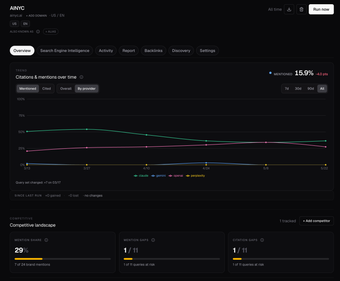
canonry, developed by Canonry, is a self-hosted platform for Answer Engine Optimization and Generative Engine Optimization. It collects AI citation data and measures a brand's 'share of voice' across generative models to inform marketing decisions and content strategy. The platform presents an AI-visibility dashboard, multi-engine citation tracking, and connects search analytics to those citations for reporting. Technical SEO professionals, agencies, and developers use it to add AI visibility metrics into marketing workflows and retain control over their data.
Agent-native design supports automated SEO actions
The tool emphasizes an agent-first workflow through a native Model Context Protocol server, allowing external models and agents to query marketing data directly. That design purpose makes canonry suitable for scenarios where autonomous agents need structured SEO signals as input, and for teams that route model-driven tasks into scripted or agentic pipelines rather than manual query-and-report cycles.
Comparative citation reporting across multiple engines
canonry produces cross-engine citation reports that list occurrences and context from specific generative engines, including ChatGPT, Claude, Gemini, and Perplexity. Those outputs let teams compare which engines cite a domain most often and examine citation contexts side by side. Community feedback on developer forums highlights this model-to-model comparison as a practical way to prioritise content adjustments for AI answer visibility.
Deployment requires developer skills and local data stores
The platform runs on a JavaScript/Node.js stack and supports Docker or plain Node environments for deployment. Data is stored locally using DuckDB or SQLite, a choice that keeps datasets lightweight but requires administrators to manage backups and storage. Expect configuration tasks such as connecting analytics feeds, configuring ingestion schedules, and maintaining the runtime environment.
Integrations link AI citation metrics to existing tooling
canonry accepts inputs from traditional analytics sources and feeds results into agent tooling. It integrates with search analytics sources and supports MCP-compliant endpoints used by tools such as Claude Desktop and Cursor, making it feasible to route citation signals into IDEs or agent interfaces. Those integration points let teams map model citations back to pages and analytics events for operational decision making.
Practical open-source choice for hands-on SEO teams
As an open-source project from a New York-based agency founded in 2025, canonry suits technical SEO teams and developers who want direct control over AI visibility data and are prepared to run and customise a platform. The real value appears when organisations allocate developer time to adapt agent workflows. Plan for ongoing maintenance and tie the tool into existing content priorities before automating actions.